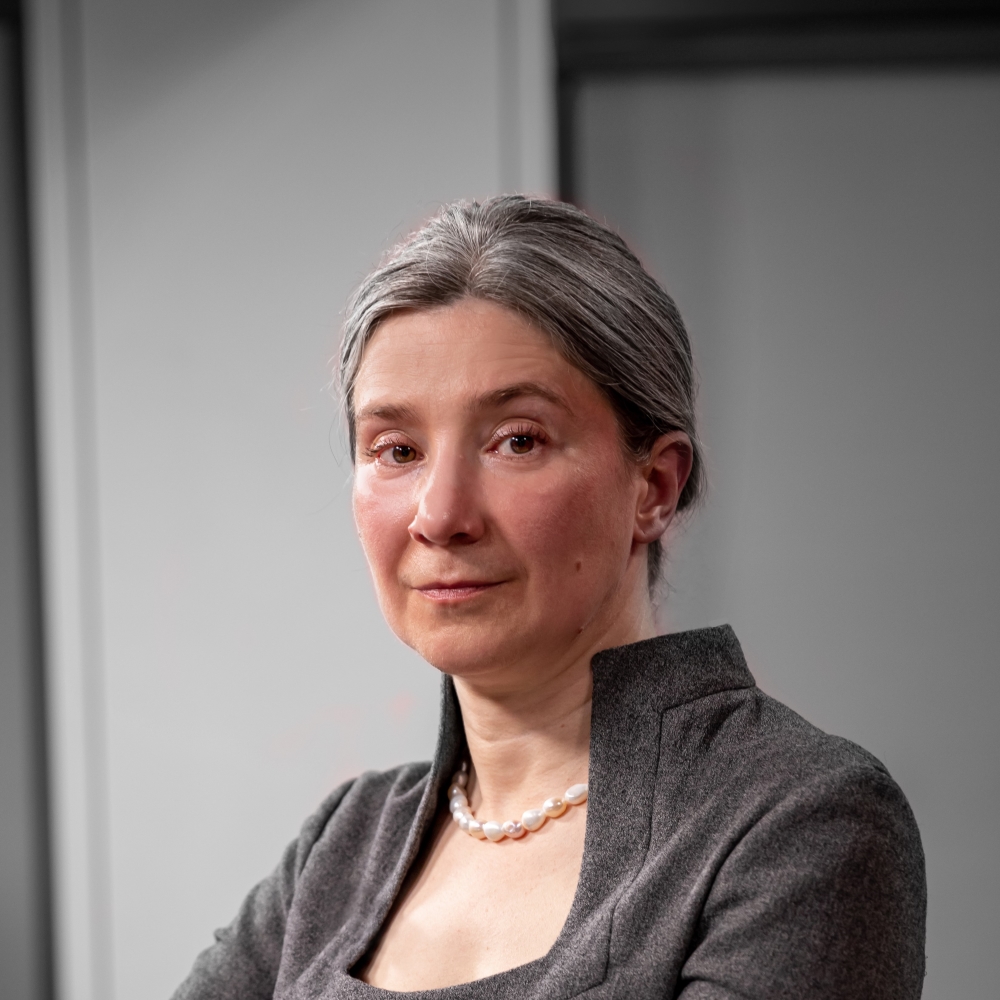
Podcast host Alex Gabuev is joined by his colleague Alexandra Prokopenko, a leading expert on the Russian economy, to discuss its state ahead of the fourth anniversary of the full-scale invasion of Ukraine, and what looks set to happen this year.
The Russian economy has been under intense pressure from sanctions, the demands of war, and structural challenges. Still, it isn’t collapsing, despite predictions and wishful thinking on the part of the West. How healthy is the Russian economy, and how much strain can it handle in 2026?
This text was automatically generated and not edited prior to publication.
Alexander Gabuev. Welcome to Carnegie Politika podcast. My name is Alexander Gabuev. I'm the director of Carnegie Russia Eurasia Center in Berlin. The topics of today's episode is the state of the Russian war economy. And we are happy to welcome again my colleague, Alexandra Prokopenko, who is the lead economist of our team. Hi, Sasha. Great to be with you.
Alexandra Prokopenko. Hi Sasha, thanks for having me here.
Gabuev. As Russia's war against Ukraine is about to hit the five-year mark, the state of the Russian economy is once again one of the most debated policy topics. Predictions that Putin's economy is about to collapse, forcing the Kremlin to reconsider its strategy in Ukraine, have been there for throughout the last four years and have been wrong so far. However, as the Russian economy enters 2026, things don't look so bright for the Kremlin, at least from my vantage point. Could you explain where you see the Russian economy at this point and what are the dilemmas that it's going to be facing this year?
Prokopenko. Of course, thanks for the question. So if we look at the Russian economy, now it's stuck in what could be called a negative equilibrium. Unlike previous years when Russia had extensive reserves - I mean financial reserves, labor reserves, lack of investment, which also creates a space for upcoming investments, so these types of reserves - now the situation is different. All kinds of reserves are almost depleted. This is the key feature of 2026. Every external shock can move this equilibrium to negative, likely negative trajectory. Of course, there are still chances for some positive outcomes, and the Russian government and central bank [are working] hard to make a soft landing of the economy. They are not sitting on their hands. That's why the Russian economy actually hasn't collapsed yet. But the situation now is different and it's much more grim than it was before. I see that Russia's economy is like a climber who is stuck above over 800 meters. Mountaineers call this altitude the death zone. At this height, the human body cannot survive for long. It consumes itself faster than it can recover. And a climber may still be standing, may still be breathing, may still be making good pictures in his fancy mountain climbing gear, but every hour causes damage that cannot be undone. Russia entered this zone not in 2026, but a year before in 2025. The economy, as I said, it's not collapsing, but it's not growing either. The economy's growth in 2025 was 1%. projections for this year are also near 1%. We can say that Russia's economy is coming back to its potential, which is also near 1%, but it's not enough for Putin. It's not ambitious [enough] for Putin. So the economy is not growing, which is can be considered as it's eating its own future. Why and why [is this happening]? During last years of the war, the economy has split into two unequal sectors. One sector is military and military-adjacent industries, which get all the resources. It's like vital organs getting priority blood flow. The other part, the other sectors, which is quite smaller now than the military one, is private businesses, consumer industries, small and medium enterprises. They are being cut off from the oxygen like fingers and toes in the cold. The problem is what the military sector produces: shells that explode, tanks that burn, death payments, and other types of benefits for soldiers. None of this creates what could be called lasting value. So money simply disappears. It's not growth. It's just the body burning its own muscle for warmth. Here, the question arises why Russia just can't stop this. I think now it's because the Kremlin is watching other climbers. Russia is not alone in this race. And what the Kremlin sees [is that] Europe is struggling. Ukraine is tired. The global economy is weak and anticipates that another great financial crisis, probably because of the collapse of AI or because of tariffs or because of the struggle between the US and China, is just around the corner. So Moscow believes that it can outlast them all. There is also another reason. Russian elites believe the West wants to contain Russia forever. War or not war, there is their trade-off. And if peace leads to the same place as fighting, why stop fighting? And here what the death zone teaches us: that no one survives at 8,000 meters forever. The only question is when your descent [will be] and what remains when you do. Some climbers can come down just missing fingers. Some never fully recover. So we will see what will happen with the Russian economy.
Gabuev. Oh, this image that you've just planted in my brain will be very difficult to forget. So every time I'm watching Putin's aide on the economy, Maxime Reschkin, I will imagine him in fancy gear, missing fingers or something like that. I guess that every doctor that assesses climbers, to tease your metaphor further, would have some indicators to watch. I definitely don't know what indicators these are for doctors who are assessing the state of mountain climbers. But what are three indicators that you, Aleksandra Prokopenko, will be watching in 2026 to assess the state of the Russian economy? Name me three things.
Prokopenko. So first and foremost, it would be oil prices. This is an external shock, which now is quite important for Russia's economy. The price for Russia's Urals crude oil doesn't spark much optimism in the Kremlin. In December, the average was below 40. In January, it was just a little above 40. And Russia is forced to trade with a considerable discount because of sanctions. Oil dynamics, which determine the dynamics of oil revenues to the Russian budget, are actually the consequence of sanctions. It is a quite success, but it couldn't be considered beyond low oil prices, beyond slowing demand in China and other external factors. But anyway, some experts were in a rush saying that, yay, Russia's economy [is no longer] on the oil needle, which is, well, partially true. The share of oil revenues within Russian revenues is shrinking. But anyway, it's still a very important source of income for the Russian budget. A $10 per barrel deviation could lead to a loss of 1.5 or 1.8 trillion rubles, which is near 19 or 23 billion dollars. Sanctions on the Russian shadow fleet also triggered more expensive and complicated logistics, which are not directly reflected in state income, but indirectly affect this significantly. Second, I think, is the civil manufacturing slump and all dynamics in manufacturing. What we see now, as I said, [is that the] Russian industrial sector is increasingly split into two alternative realities. I anticipate that military-adjacent sectors will continue to thrive in 2026 compared to shrinking civil manufacturing. This dynamic, I think, will persist. A continuation of this trend for more than two quarters would signal structural deindustrialization rather than cyclical downturn. Third, I think it's very important this year to look at regional budgets. Almost two-thirds of Russian regions, so more than 55 out of 89, if we consider annexed territories as Russian territory, ended the year with a deficit. The picture is uneven. So Moscow, St. Petersburg, and Tatarstan account for two-thirds of the total surplus, which means that most part of the other regions are in the worst shape. Regions rich in raw materials are hardest hit. So coal mining hub Kemerovo has a great shortfall. Irkutsk lost a lot. Yamal and Nenets Autonomous Okrug, the cradle of gas in Russia, they have really high deficits. The finance ministry and the government [are] launching a large scale program of writing off budget loans to regions. But according to Prime Minister Mikhail Mishustin, aid will primarily go to regions that are actively supporting soldiers fighting in Ukraine through large one-off payments. So we can say that the war is eating up regional budgets, and that's also a potential trigger potentially worsening the equilibrium. I would probably highlight a fourth indicator which I think is quite important. It's what I call "moral hazard." It's not an indicator itself but it's extremely important to see which companies, which corporations the Russian government will save in 2026. We already witnessed a queue to the government from the corporate sector, which wants support from state funds. And it is the coal industry, oil industry. mining industry and metallurgy among them. Just recently, one of the biggest developers, Samolyot Group, requested help. Is the situation within the corporate sector so dire? I don't think so. But the problem is that many corporations have expectations that the Kremlin will ride to their rescue. Major banks and corporations have experienced three recent rounds of government bailouts in 2008, in 2014, in 2020. They know that if they are systematically important players, so if they are too big to fail, probably the government will come and save them. Now we are at the point where there are not enough reserves to save everyone. So it would be very interesting [to see] which type of businesses, which particular corporations will get bailouts from the state, will get any kind of state support. I think this will determine the dynamics within elite relationships.
Gabuev. Super interesting. There are two indicators that I would also be interested in your opinion about. One is the size of the budget deficit and two is inflation and the key rate. Let's start with the budget deficit, because you mentioned regional budget deficit, which is interesting and I don't think that too many people are tracking those issues. But the federal budget is definitely an object of big obsession in the Western policy debate. We saw last year that the Russian government initially anticipated a budget deficit of half percent GDP, and it ended up with 2.6 percent GDP. This year, the deficit is projected to be around 1.5 percent GDP. Do you think it's significant and do you expect that the size of the budget deficit will stay within the limit of government predictions or will actually overshoot it like what happened last year? And does the government have any plans to control or cut ballooning spending?
Prokopenko. Well, for now, we don't have any evidence that the government has other plans than cut spending and keep deficit under control. Yes, 2.6 GDP in 2025 was the biggest level since the pandemic. But the scariest [thing] is not the deficit itself, but the way the government financed it. Now, the government financing deficits are mostly from a source of internal borrowing. It's still possible. The current inflation, which was 5.6% last year, is a result of monetary policy, a strong ruble exchange rate, and limitations on the side of trade balance. If the government has a bigger tolerance [for] inflation, it's possible to increase domestic borrowing. The key unknown here is the war dynamics and how much money war will request from the government. The first month was quite anxious for FinMin. Income shrank by 11.6%. And it's all about the decline in oil and gas income, which was a significant drop [of] 50% year to year. Of course, it's still possible to compensate all this from National Wealth Fund, and it's unwise to make conclusions on year dynamics for two months in a row. So let's see. It's still possible that the government could term spending. But the key unknown here is what's going on at the front line.
Gabuev. And then inflation and the interest rate. I think that you've mentioned that this Russian climber has developed two metabolic systems, and one is the war-related part of the economy and the other is the civil part of the economy, although they definitely have overlaps. So there is this problem that the war-related part of the economy gets more preferential access to banking loans, they have subsidized interest rates, and this is why very high interest rate affects the civilian part of the economy much more than anything war-related. However, these high interest rates affect not only civilian businesses, but also state finance because it drives the cost of servicing government debt to very uncomfortable levels. I think that according to your calculation, it used to be 4.4% of budget expenditures before the war. And now it's double that. It's nearly 9%.
Prokopenko. Yes, 8.8% of government spending went to interest payments.
Gabuev. So why, in your view, is inflation so difficult to tame? And do you expect the Bank of Russia to actually accomplish its goal on inflation targeting this year and be able to reduce the rate? Like, what are the trade-offs that you see?
Prokopenko. Well, inflation is sticky, and it was sticky after COVID. Let's go back there. But anyway, the problem is a combination of difficulties on the supply side within Russian industry and limitations imposed by sanctions. Simultaneously, lots [of] types of imports, and we [must] always keep in mind that Russian economy is quite dependent on different types of imports. Russia was cut off [from] this. For Russian businesses, it was not easy to open domestic production or to find substitutes quickly. But anyway, when it was done, it appears that it was costly and there were a lot of transactional costs imposed [on] the economy by sanctions, which is basically a cause of inflation.
There is another code of inflation, which leads us to labor markets.
The labor market remains tight. And if there are not enough workers, employers start to compete, driving [up] wages. We witnessed the wage race during the last three years. All this means that people have more money and they're consuming more, which brings us back to the supply side and problems there. So inflation is sticky and the Central Bank, well, it's absolutely right that it's going to tame it, doing whatever it takes. But of course, it's not easy, especially since other parts of the economy are struggling. For example, monopolies like utilities monopolies or railways [are] forced to increase tariffs within the next year. And now we have anecdotal evidence on TikTok and Instagram: now Russians [are] posting videos with new bills for utilities and saying, "OK, how is this compared with 5.6 inflation." And that's only the first tariff hike this year. There will be a second [hike] after parliamentary elections in October, so Russians could be surprised one more time. It's not a problem just for the Central Bank, but it seems that the Central Bank is the only player in the room who is trying, who is fighting inflation and other players fighting on the side of inflation. This unequal game brings this unhappy dynamic.
Gabuev. I guess that we discussed a lot [regarding] mounting problems in the Russian economy. What about the policy implications? The hope in the West is that because of the problems that you describe - and people would add multiple layers or use other figures to say that they are actually worse - there will be some societal pressure building on the Kremlin and forcing Vladimir Putin to seek resolution through Trump's mediation effort and then end the war. However, I fail to see the number of people affected that would have appropriate tools to show their grievances and put this pressure [on] the Kremlin. On one side, you have a very resourceful repression mechanism that the Kremlin has beefed up over the course of the war. And on the other side, you see very low unemployment. So yes, people may be dissatisfied because the prices are growing, But most of them have jobs. Their unemployment is at historic lows still. Do you agree? And by the way, will the employment situation change because of the mounting problems in these non-war sectors that you described? Like, for example, the possible bankruptcy of Samolyot, this property developer, or some other sectors will release arguably a lot of workers who may be actually disaffected and may seek ways to protest.
Prokopenko. You have two questions here. Let's start with the labor market. The situation there remains tight. There is still a shortage of workers in the economy, and unemployment, by government projections, is expected to remain low - around 2.5% over the next couple of years. It is partially because of the features of the Russian labor market. Corporations are not big fans of massive layoffs. So they are more actively using different types of furlough schemes or part[ial] employment or something like this. And now we see that dynamics within sectors have begun to diverge. As the economy slows down, companies are holding back on their investment plans. And as a result, they are not planning to hire. So now we see a number of sectors, for example, IT, where salaries have stopped growing, which is a sign that the sector is saturated with specialists. But there is still high demand for so-called blue-collar professions. And we're also seeing growing competition between the army, the military-as-employer, and civilian life. Some slowdown in the recruitment of contract soldiers is probably due to increases in the bonus of remaining in civilian life with all your limbs intact. You can get relatively the same amount of money, but stay healthy with your family and without the risk of being killed. That's very important. And this will determine the future dynamics of the labor market.
Gabuev. All right, on the tools to protest, I think that we are in agreement that these tools are very few for ordinary people, but there should be ways for the elites to make their displeasure known. One of the factors of the regime stability is that the Russian elites have stayed with Putin. You have just published a book in Russian about it. The English version is on the way. I know that it will appear this year, which we all very [much] anticipate. Is anything changing on that front in year five of the war? And does the West have any tools to change the calculus of rich and powerful people in Russia?
Prokopenko. Well, it's a good question since we are at year five, but I don't think that the West is out of options. There are still tools available, and one of them is, for example, capital flow controls over the money of individuals. So if we look back, sanctions have pushed the great repatriation. The number of so-called high net worth individuals jumped back above pre-war levels in 2024 after falling in 2022. More than 22,000 wealthy Russians account for almost $150 billion dollars stashed in domestic bank accounts, which is around a quarter of the national total. In the private banking sector, the growth in the number of these high net individuals, so which have capital of 50 million rubles or more, is really noticeable, and private banking is thriving in Russia. Only in 2024, their number grew by 39% to more than 6,000 people. The attention of wealthy Russians to banks in Switzerland and in EU countries has decreased by four to six times. Turkey has failed to live up to the expectations of wealthy clients, and it's difficult to enter mainland China, so they don't have a lot of options. Thus, 97% of deposits of individuals are concentrated in banks subject to sanctions. And indirectly, this money is de facto working for Russia's heavily militarized economy. So it was a very important factor inside Russia in 2023 and 2024. The problem is that these people still have no trust [in the] Russian banking system and Putin. They don't like war, but their options are limited and sanctions created for them a sort of institutional vacuum and a sense of alienation from the rest of the world. Also, inside Russia, sanctions have created a real caste of profiteers, parallel import wholesalers, compliance consultants, and shadow fleet owners. There are margins just throwing. Luxury car showrooms still burst, but budget households pay more for fridges, flights and mortgages. This is the reality. And the people which we're calling the elite - I don't like this definition - meanwhile find themselves locked in. So travel curbs, blocked foreign accounts and fear of asset redistribution leave them few exit routes and little incentive to rebel. They don't like the war, as I said multiple times, and the direction in which Putin [is taking] Russia. They still do not trust the Russian banking system. Every time something happens, they pop up with the questions, "OK, are they going to arrest my deposits? Are they going to seize my money?" But being removed from the sanctions list doesn't mean a return to the Western family, doesn't mean a return to the global world, where they previously considered themselves members. So as a result, the West's punitative architecture is doing a decent job slowing Russia's future growth potential, but a lousy job starving the war machine today. Worse, it's hastening a multipolar payment order that will be harder to police. So I guess that merely adding names to blacklists will not change this trajectory, and the smarter embargo but must be asymmetric, exploiting Russia's scarcities rather than its abundances. So let Putin bleed with his money and brains. I think that would be the wise strategy, and it's still open for countries who are sending sanctions.
Gabuev. Thank you so much, Sasha. That would be a wonderful end to this conversation, an optimistic end, which is rare. I'm very happy that you could join us today.
Prokopenko. Thank you, Sasha. It was very nice to talk to you.
Gabuev. We were very glad to record this episode. Don't forget to hit the subscribe button to not miss any new episodes of this podcast. And we'll see each other in two weeks.
Carnegie does not take institutional positions on public policy issues; the views represented herein are those of the author(s) and do not necessarily reflect the views of Carnegie, its staff, or its trustees.
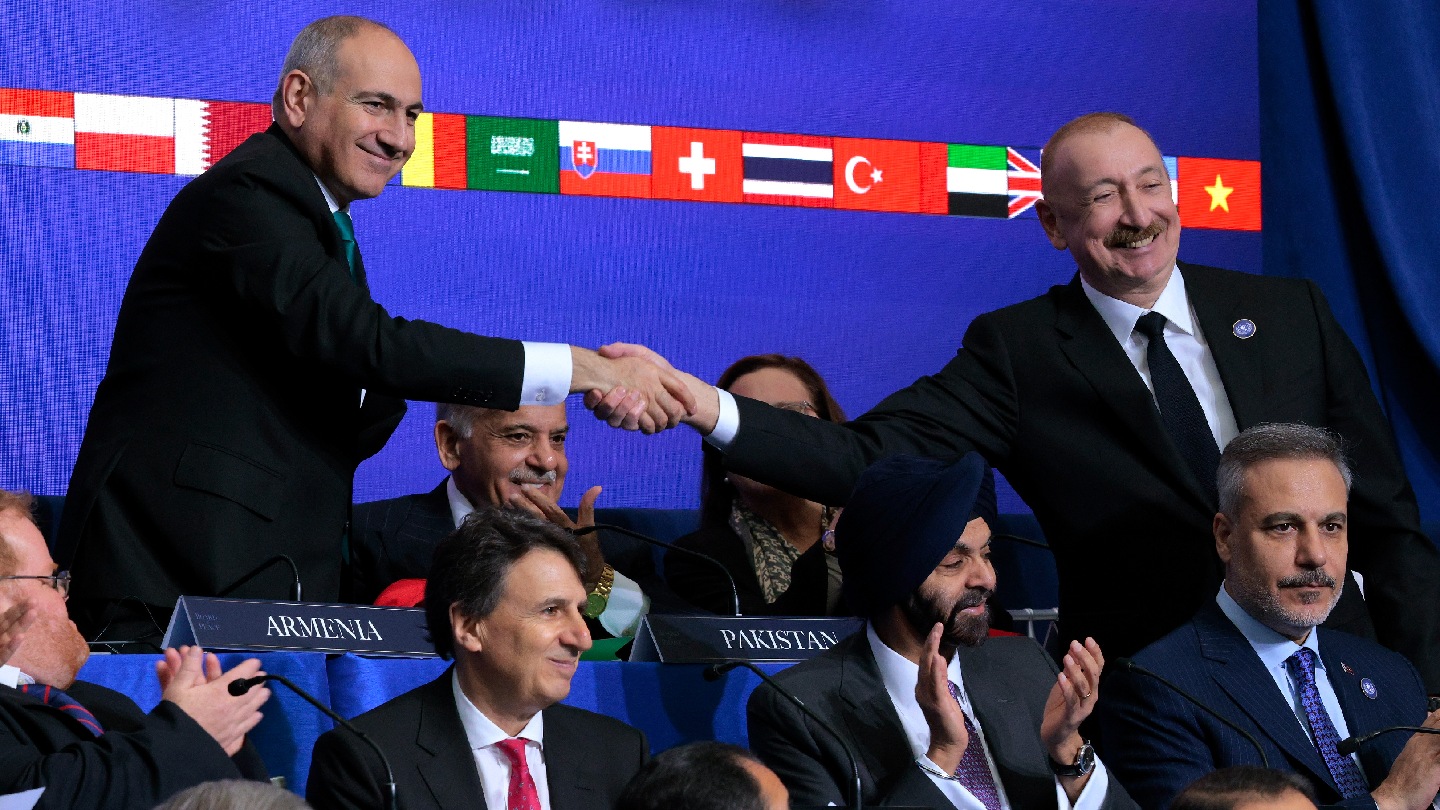
Podcast host Alex Gabuev is joined by his colleague Zaur Shiriyev, a non-resident fellow at Carnegie Russia Eurasia Center, and Philip Gamaghelyan, an associate professor at the University of San Diego, to discuss the peace process between Armenia and Azerbaijan and its implications for the South Caucasus.
Alexander Gabuev, Zaur Shiriyev, Philip Gamaghelyan
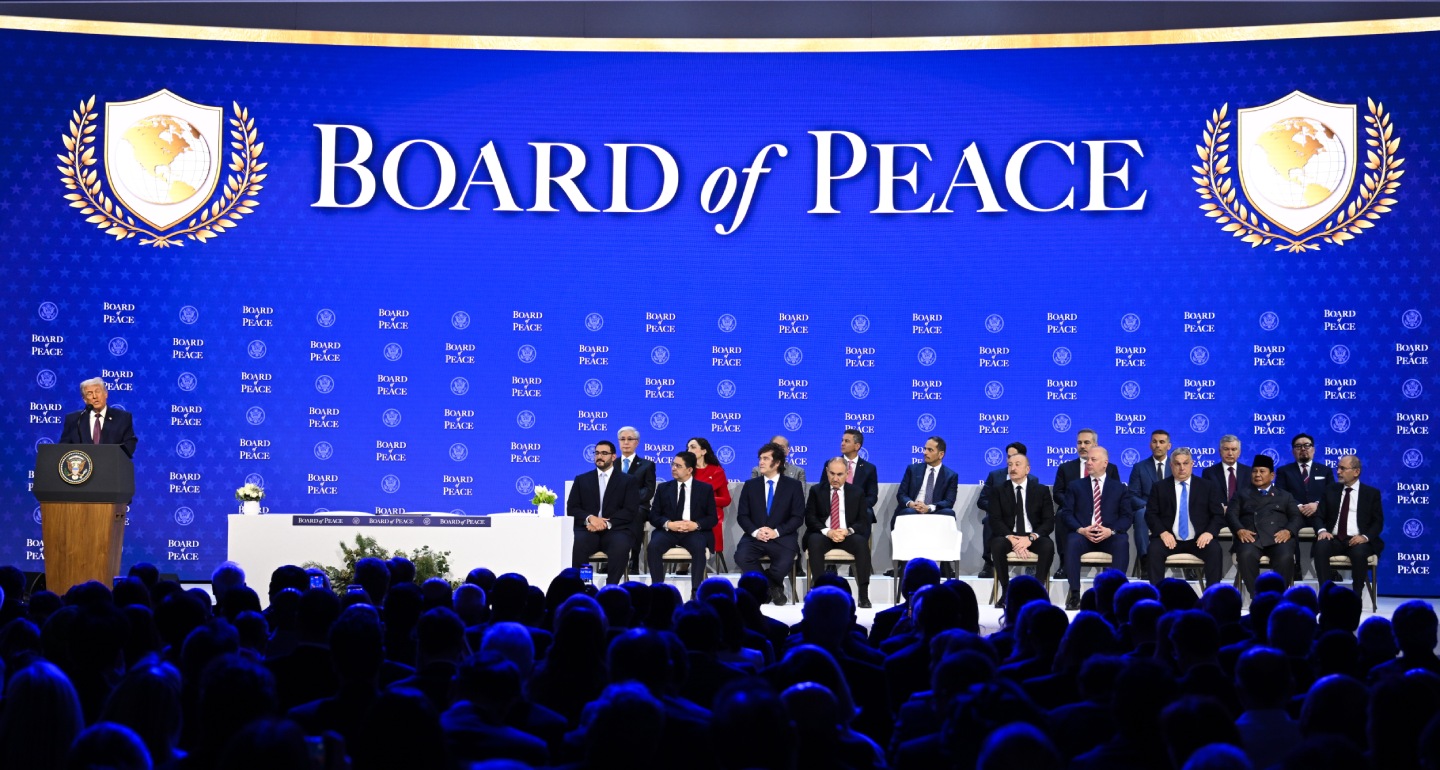
Podcast host Alex Gabuev is joined by Gideon Rachman, chief foreign affairs commentator for the Financial Times, to talk about the World Economic Forum in Davos and the European strategic discussion on the war in Ukraine and managing a rogue Russia.
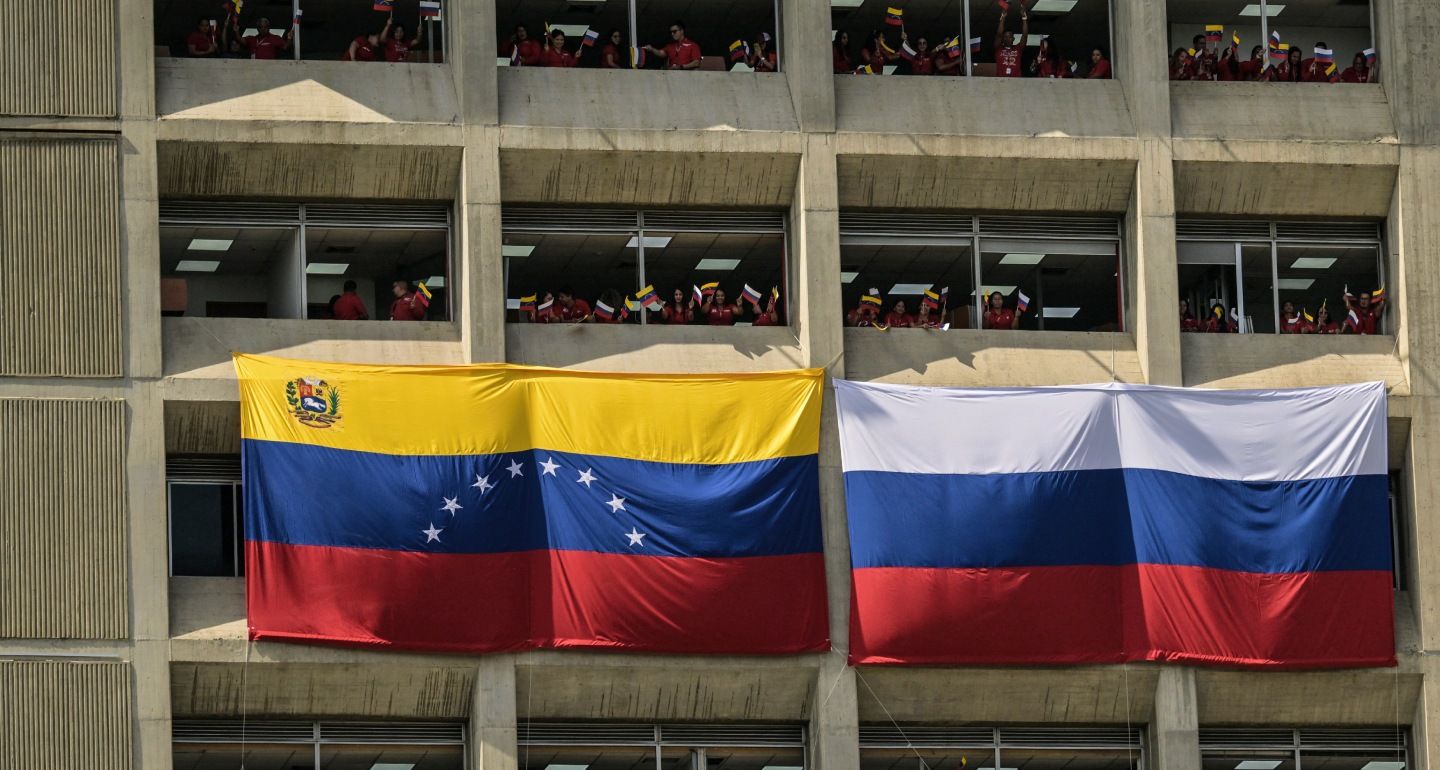
Podcast host Alex Gabuev is joined by his colleague Sergey Vakulenko, a senior fellow at Carnegie Russia Eurasia Center, to discuss how the latest U.S. intervention in Venezuela and control of itsoil will affect Russia and its reputation as a patron saint for other regimes aligning themselves against the United States.
Following Vladimir Putin’s state visit to India, podcast host Alex Gabuev is joined by Pankaj Saran, former Indian ambassador to Moscow and convenor at NatStrat, to discuss India’s position amid China’s growing influence, U.S. tariffs, and Russian aggression.
Podcast host Alex Gabuev is joined by Ekaterina Schulmann, a non-resident senior fellow at Carnegie Russia Eurasia Center, and Alexander Graf Lambsdorff, the German ambassador to Russia, at the Berlin Foreign Policy Forum to discuss the last thirty years of Russian history and how freedom turned into dictatorship and war.
Alexander Gabuev, Ekaterina Schulmann, Alexander Graf Lambsdorff