

Commentary
Artyom Shraibman
{
  "authors": [
    "Artyom Shraibman"
  ],
  "type": "commentary",
  "blog": "Carnegie Politika",
  "centerAffiliationAll": "",
  "centers": [
    "Carnegie Endowment for International Peace",
    "Carnegie Russia Eurasia Center"
  ],
  "englishNewsletterAll": "",
  "nonEnglishNewsletterAll": "",
  "primaryCenter": "Carnegie Russia Eurasia Center",
  "programAffiliation": "",
  "regions": [
    "Ukraine",
    "Belarus"
  ],
  "topics": [
    "Security",
    "Global Governance"
  ]
}
Source: Getty
The risk posed by Lukashenko today looks very different to how it did in 2022. The threat of the Belarusian army entering the war appears increasingly illusory, while Ukraine’s ability to attack any point in Belarus with drones gives Kyiv confidence.
Ukraine has unexpectedly rebooted its policy toward Belarus: not through more communication with official Minsk, like the United States is doing, but through rapprochement with the Belarusian regime’s opponents in exile. Until now, Kyiv had sought to avoid unnecessarily provoking the contested Belarusian leader Alexander Lukashenko, lest he start providing more active assistance to Russia in the war.
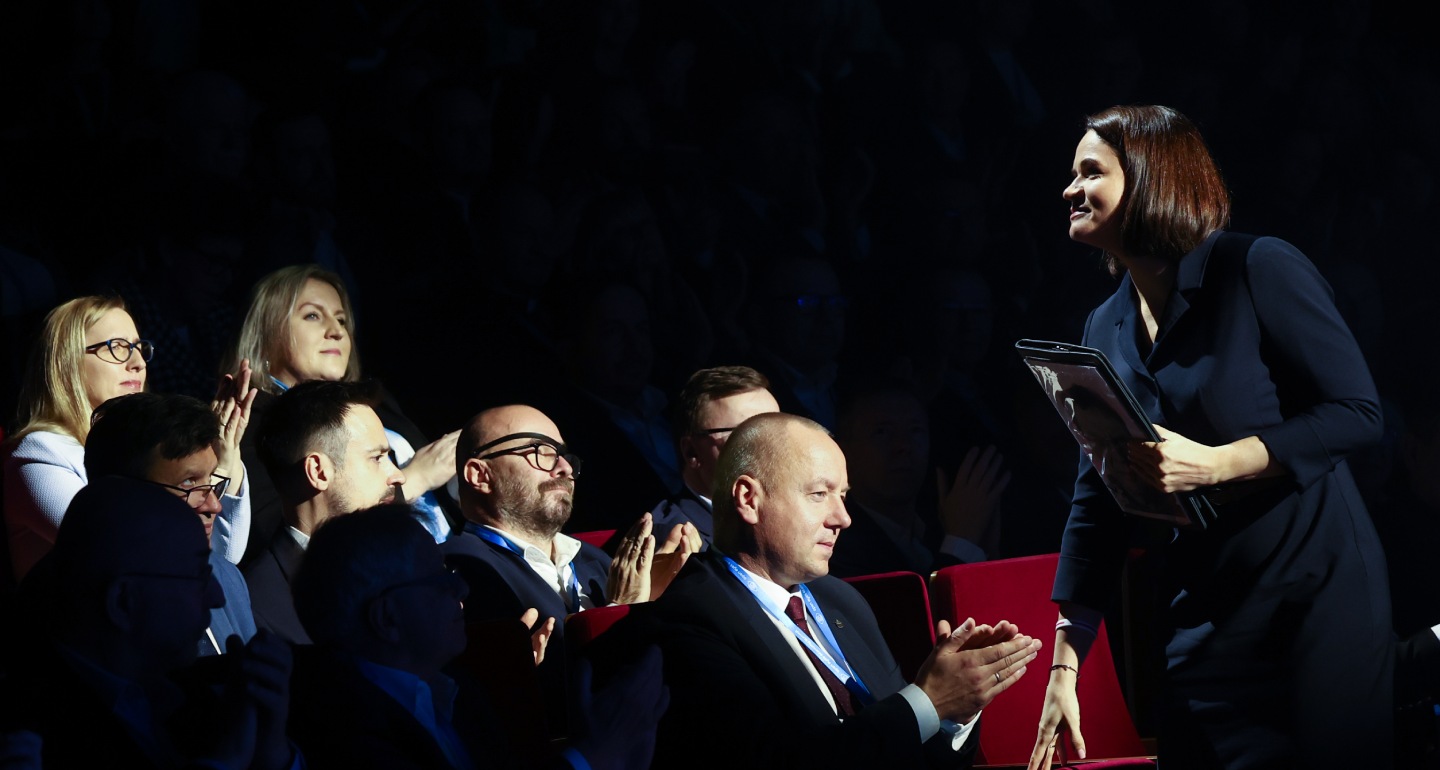
Ukrainian President Volodymyr Zelensky held his first proper meeting with Sviatlana Tsikhanouskaya, the leader of the Belarusian opposition-in-exile since mass protests against Lukashenko back in 2020, on January 25 in Vilnius—and according to Tsikhanouskaya’s office, the initiative came from Zelensky’s team.
Kyiv had previously avoided such contact, as it saw any interaction with the Belarusian opposition as largely pointless and an additional irritant for Lukashenko, while the main goal of Ukraine’s Belarus policy was to reduce the likelihood of Minsk getting any more involved in the war.
Now Zelensky has changed tack, inviting Tsikhanouskaya to Kyiv and promising to soon appoint a new special representative to work with Belarus’s democratic forces: a post that has been empty for the last year. Announcing the development of relations with the Belarusian opposition, new sanctions, and attempts to bring Lukashenko to international justice, Ukrainian Foreign Minister Andrii Sybiha said that the Belarusian issue deserved a “separate systemic policy.”
There are many reasons for such a drastic change in Kyiv’s relations with Minsk, but it could not have happened without the departure of Andriy Yermak from the post of head of the presidential administration. As confirmed by sources in both Ukraine and Belarus, Yermak was the main opponent of improving relations with Tsikhanouskaya.
His replacement, Kyrylo Budanov, had already been visibly active on the Belarusian front, having recently organized the arrival in Ukraine of over a hundred political prisoners from Belarus, including five Ukrainian nationals, as well as facilitating a conversation between freed opposition leaders and Zelensky.
But Yermak’s departure is not the only factor. A combination of new circumstances in Ukrainian–Belarusian relations have accumulated over a long time and have now led to an about-face.
One reason cited by Sybiha, the foreign minister, is the more active involvement of Belarus in Russia’s military maneuvers. Zelensky has also repeatedly said that the Oreshnik missile system that the Kremlin claimed in December to have deployed to eastern Belarus (no independent evidence of its launchers or missiles has been found) poses a threat to all of Europe. And Kyiv said that recently, Russian drones have started to use cell towers located in Belarus’s border regions to coordinate strikes against Ukraine and bypass its air defenses.
If that is the case, it’s a departure from the last three years. Since the fall of 2022, Belarus has been less and less involved in Russia’s military operations. By the end of 2023, the number of Russian soldiers in Belarus had fallen to about 2,000—close to pre-war figures—and most Russian aircraft had left Belarusian airfields.
Minsk’s return to more active military cooperation with Moscow may well have pushed Kyiv to consider a new approach to Belarus—and to do so at a time when the risk posed by Lukashenko looks very different to how it did in 2022. The threat of the Belarusian army entering the war looks increasingly illusory, given that its troops would be a drop in the ocean among the more than a million soldiers from both sides at the front. Plus, Ukraine’s ability to attack any point in Belarus with drones and missiles also gives Kyiv confidence.
Finally, the growing ties with Tsikhanouskaya also reflect Zelensky’s efforts to strengthen Ukraine’s alliance with the EU. U.S. President Donald Trump is thawing relations with Lukashenko and, to a lesser extent, with Russian President Vladimir Putin, to the obvious displeasure of Europe, especially Belarus’s western neighbors: Poland and the Baltic states. Ukraine, counting on ongoing EU support—and indeed on soon joining the bloc—is bringing its Belarus policy in line with that of the organization.
It is not yet clear what concrete results Kyiv’s warmer relationship with Tsikhanouskaya might yield. The Ukrainian government and the Belarusian opposition exist in different dimensions. The former is waging a war in which diplomacy must be used to find weapons, resources, and allies who can provide them. The latter is a symbolic representation of an alternative Belarus, mainly working on upholding human rights.
Nor is it immediately obvious what the two may be able to agree upon. Kyiv won’t arm the Belarusian opposition to march on Minsk, or send its Kalinovsky regiment of Belarusian volunteers there, and Tsikhanouskaya’s cabinet won’t raise funds for Patriot interceptor missiles or organize a network of partisans behind enemy lines.
Tsikhanouskaya’s expected visit to Kyiv will undoubtedly be a major event. It could lead to the lifting of some legal restrictions for the Belarusian diaspora in Ukraine, such as problems with access to banks. It also opens the door for a general improvement in Ukrainian attitudes toward Belarusians.
But if Zelensky’s team is counting on that being a mutual process—that by supporting the opposition, which has been in exile for five-and-a-half-years, it can seriously influence the mood of Belarusians in Belarus—then it may be disappointed. Opposition-minded Belarusians are already generally pro-Ukrainian, but making any statement on the matter carries the risk of imprisonment. In addition, strict censorship and the preponderance of Russian and Belarusian propaganda makes it all but impossible for them to get their point across to others.
A more pertinent question is how Ukraine’s new approach will influence Minsk’s behavior. So far, the Belarusian authorities’ only response has been to unleash anti-Ukrainian propaganda. But an official response is unlikely to be long in coming. Even if Lukashenko keeps quiet for now, he will be forced to react when Tsikhanouskaya is officially received in Kyiv and when a special representative for contact with her is appointed.
Minsk could expel the Ukrainian diplomats who remain in Belarus, or devise a symbolic counterattack, such as a visit by Lukashenko to Crimea. A refusal to assist with Russian–Ukrainian exchanges of prisoners and war dead via Belarus is less likely. That would run counter to Minsk’s own interests, including its attempts to curry favor with Washington by positioning itself as a regional peacemaker. More active support for Russia’s war would bury that ambition once and for all.
It may be difficult to predict what Ukraine’s new policy toward Belarus will bring, but it’s not hard to say what it certainly will not. Minsk’s hopes of expanding its role in the Ukrainian peace process and then immediately after the war restarting trade with Ukraine or using its logistics to export Belarusian goods to other countries are fading fast. Kyiv, meanwhile, is showing that it has no intention of differentiating between the various degrees of its enemies, and that Lukashenko should look elsewhere for opportunities to legitimize himself.

Nonresident Scholar, Carnegie Russia Eurasia Center
Artyom Shraibman is a nonresident scholar at the Carnegie Russia Eurasia Center.
Recent Work
Artyom Shraibman
Artyom Shraibman
Carnegie does not take institutional positions on public policy issues; the views represented herein are those of the author(s) and do not necessarily reflect the views of Carnegie, its staff, or its trustees.
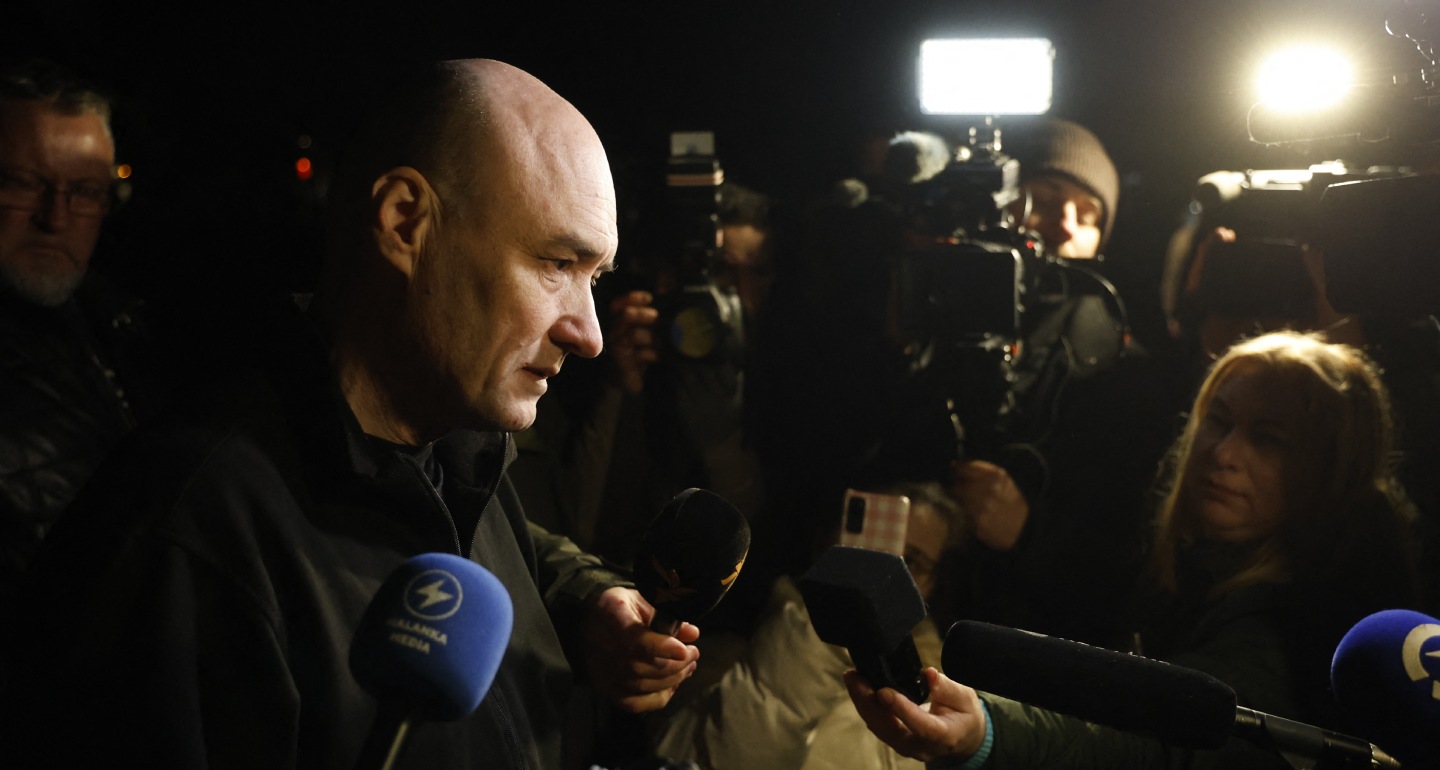
Lukashenko is willing to make big sacrifices for an invitation to Mar-a-Lago or the White House. He also knows that the clock is ticking: he must squeeze as much out of the Trump administration as he can before congressional elections in November leave Trump hamstrung or distracted.
Artyom Shraibman
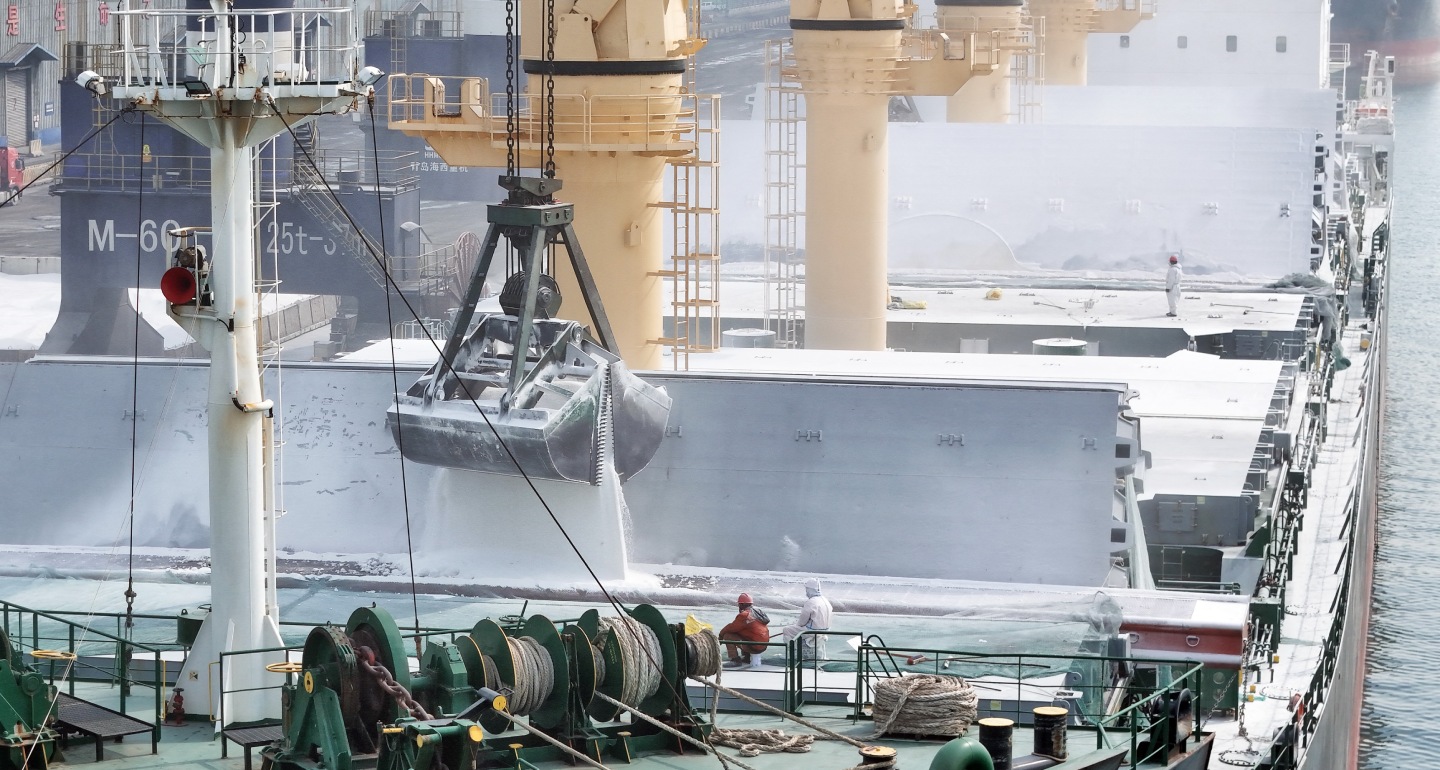
The Kremlin expects to not only profit from rising fertilizer prices but also exact revenge for the collapse of the 2023 grain deal.
Alexandra Prokopenko
It’s disingenuous to criticize a film for simplifying Russia’s complexities when Russia is waging a brutally simple war of aggression against its neighbor.

Alexander Baunov
The current U.S. indifference to human rights means Astana no longer has any incentive to refuse extradition requests from its authoritarian neighbors—including Russia.

Temur Umarov
Most of Moscow’s military resources are tied up in Ukraine, while Beijing’s foreign policy prioritizes economic ties and avoids direct conflict.

Alexander Gabuev, Temur Umarov